While this weekend was primarily dedicated to naive wonderment and baby-steps in programming, I found plenty of time to sneak in bursts of Jane Austen.
pride and prejudice
I pushed through my fatigue and read quite a bit more of Pride and Prejudice. Currently, Mr. Collins is in town and has his heart set on Elizabeth but I have not yet gotten to the proposal. I believe I stopped in the midst of Wickham's well-spun yarn of Darcy's betrayal and his own admirable forbearance. I owe P.D. James quite the apology for my expression of distaste at the amount of time spent on Darcy's thoughts in Death Comes to Pemberley. I posited that this was in sharp contrast to Austen's Pride and Prejudice, but it is not true! Much more space is dedicated to the inner thoughts of Mr. Darcy as he recognizes and fights his infatuation with Elizabeth Bennet than I had recalled. I have become so accustomed to the BBC miniseries that it holds sway in my mind as to the truth of Pride and Prejudice. While the adaptation is certainly the story of Elizabeth Bennet, the novel is much more equitable in its dedicated space. This is a delightful discovery and I am supremely enjoying this re-reading. I am so glad I didn't truly quit!
emma
With a bottle of white wine already chilled, I was quite agreeable to Anna's suggestion that we watch the Gwyneth Paltrow-led adaptation of Emma on Saturday evening. This is another of my favorite Austen adaptations and though I had not seen it years, it lived up to my nostalgic expectations. Paltrow is a fantastic Emma and the cast is littered with esteemed British actors. I am happy to say I have not yet seen a disappointing Austen adaptation - though I am sure they exist, so I tread into these waters carefully. I also discovered that Anna owns a copy of Clueless, and so...
On Sunday, we had to watch Clueless! It has easily been ten years since I've seen this film, but it also lived up to expectations. I was a bit wary as we started it that it would be one of the films you loved in your adolescence but upon later viewing seemed cheesy and dated. It is not the case at all here. First, it is an excellent modernization of Emma - the key plot points are all there, but manipulated just enough to make them plausible for a 1990s teenager. The script is smart: the jokes are clever and stand up to the test of time. The only thing that really dates this film is the fashion and the music, and those are two things we love to look back on with rosy nostalgia.
I am happy to report that Jane Austen made my weekend quite enjoyable. I will surely owe her more gratitude as Pride and Prejudice provides me tiny moments of escape during this busy, busy week.
Showing posts with label summer of austen. Show all posts
Showing posts with label summer of austen. Show all posts
Monday, August 6, 2012

Tuesday, July 31, 2012
Death Comes to Pemberley... and I Resurrect Pride and Prejudice
Just five days ago, I gave up on re-reading Pride and Prejudice. And I was totally okay with that. And if this was your project, and you did that, I would not judge you at all.
But I can't quit.
Maybe I just needed an Austen break. Maybe reading Death Comes to Pemberley reignited my drive. Whatever it was, I realized this morning that I just could not compromise on my original plan for this project.
So, I'm back on board with Pride and Prejudice. With a little over a month left, I have quite a bit of reading to do. Luckily, my little introverted heart needs a break from all the socializing and coast-hopping and is screaming for me to just have a couple nights in to relax.
But let's go back and talk about Death Comes to Pemberley. This novel picks up the story of Elizabeth and Darcy, six years later, happily settled at Pemberley with two beautiful children and a happy life punctuated with, of course, family drama here and there. Though she is not particularly welcomed to Pemberley, Lydia shows up in the middle of the night before an annual ball, and plunges our favorite characters into a murder mystery.
I was happily impressed with the continuity of story. It felt seamless, often referencing small plot points from Pride and Prejudice. At times, though, I felt that James challenged how I understood these characters. Elizabeth became less romantic and mused on how financial considerations impacted her past decisions. Charlotte is suddenly less sympathetic and a bit devious. And Darcy is now quite thoughtful and romantic! I don't know that these characterizations are wrong, and I might also be far too influenced by the BBC adaptation, but it just felt "off" at times to me.
I also have very little interest in reading contemporary mystery novels. While this retained the language and writing style of Jane Austen, there were too many features of modern storytelling that frustrated me. For example, the same details, around the events of the murder in question, were repeated numerous times. Occasionally, this was done to illustrate how one person's recollection varies from another, or to introduce a small piece of information not previously known. More often, though, I felt like I was suffering through another three-page retelling of "what happened that night" without any payoff.
Yet, this was a quick read and it was fun. The requisite twists were surprising, though not shocking. I didn't feel any compulsion to keep reading as I do in my best experiences but I did not have to force myself to get through the story. I certainly do not feel any worse off having read it, if that's a recommendation at all.
Verdict: if you love pride and prejudice, it's a cute read; good for beach days or rainy weekends
But I can't quit.
Maybe I just needed an Austen break. Maybe reading Death Comes to Pemberley reignited my drive. Whatever it was, I realized this morning that I just could not compromise on my original plan for this project.
So, I'm back on board with Pride and Prejudice. With a little over a month left, I have quite a bit of reading to do. Luckily, my little introverted heart needs a break from all the socializing and coast-hopping and is screaming for me to just have a couple nights in to relax.
But let's go back and talk about Death Comes to Pemberley. This novel picks up the story of Elizabeth and Darcy, six years later, happily settled at Pemberley with two beautiful children and a happy life punctuated with, of course, family drama here and there. Though she is not particularly welcomed to Pemberley, Lydia shows up in the middle of the night before an annual ball, and plunges our favorite characters into a murder mystery.
I was happily impressed with the continuity of story. It felt seamless, often referencing small plot points from Pride and Prejudice. At times, though, I felt that James challenged how I understood these characters. Elizabeth became less romantic and mused on how financial considerations impacted her past decisions. Charlotte is suddenly less sympathetic and a bit devious. And Darcy is now quite thoughtful and romantic! I don't know that these characterizations are wrong, and I might also be far too influenced by the BBC adaptation, but it just felt "off" at times to me.
I also have very little interest in reading contemporary mystery novels. While this retained the language and writing style of Jane Austen, there were too many features of modern storytelling that frustrated me. For example, the same details, around the events of the murder in question, were repeated numerous times. Occasionally, this was done to illustrate how one person's recollection varies from another, or to introduce a small piece of information not previously known. More often, though, I felt like I was suffering through another three-page retelling of "what happened that night" without any payoff.
Yet, this was a quick read and it was fun. The requisite twists were surprising, though not shocking. I didn't feel any compulsion to keep reading as I do in my best experiences but I did not have to force myself to get through the story. I certainly do not feel any worse off having read it, if that's a recommendation at all.
Verdict: if you love pride and prejudice, it's a cute read; good for beach days or rainy weekends
Thursday, July 26, 2012
Quitting Pride and Prejudice
I have quit my rereading of Pride and Prejudice.
I just can't do it. I read this book about a year ago. I've seen the BBC and Keira Knightley-led adaptations countless times. I just cannot read this book again, not right now. It's a good book; I love it. But it doesn't feel fresh to me at all right now and I found myself dreading reading in general because of the obligation. And that's not the point of this, at all.
I tackled two Pride and Prejudice-related tasks last night though: reading P.D. James's Death Comes to Pemberley, which has started off wonderfully, and watching The Lizzie Bennet Diaries. This book is really quite delightful. James retains much of Austen's language and cadence, which really makes it seem like a proper sequel. The plot is quick enough (in sometimes stark contrast to Austen's, um, patience with her plot development); I expect to be through it before the end of Friday. It's very obviously something done by someone who loves Jane Austen and Pride and Prejudice, which in itself is rather endearing. The web series next mentioned is a sort of modern twist on Pride and Prejudice. I'm pacing at about two videos a day; they're short and pretty cute.
I may not reread Emma either.
Disappointments abound, but as long as I get through all the new-to-me Austen works, I'll be satisfied with my endeavor.
I just can't do it. I read this book about a year ago. I've seen the BBC and Keira Knightley-led adaptations countless times. I just cannot read this book again, not right now. It's a good book; I love it. But it doesn't feel fresh to me at all right now and I found myself dreading reading in general because of the obligation. And that's not the point of this, at all.
I tackled two Pride and Prejudice-related tasks last night though: reading P.D. James's Death Comes to Pemberley, which has started off wonderfully, and watching The Lizzie Bennet Diaries. This book is really quite delightful. James retains much of Austen's language and cadence, which really makes it seem like a proper sequel. The plot is quick enough (in sometimes stark contrast to Austen's, um, patience with her plot development); I expect to be through it before the end of Friday. It's very obviously something done by someone who loves Jane Austen and Pride and Prejudice, which in itself is rather endearing. The web series next mentioned is a sort of modern twist on Pride and Prejudice. I'm pacing at about two videos a day; they're short and pretty cute.
I may not reread Emma either.
Disappointments abound, but as long as I get through all the new-to-me Austen works, I'll be satisfied with my endeavor.
Monday, July 23, 2012
Watching Sense and Sensibility
Friday night, AVH tolerated my intermittent commentary and watched the Emma Thompson adaptation of Sense and Sensibility with me. Overall, I absolutely enjoyed it. The adaptation of this very long and tedious novel was extraordinarily done, keeping all the major plot points and adding just enough extras to make up for some of the things Austen left out of the novel (ahem, a certain engagement scene).
I have a few thoughts though:
I have a few thoughts though:
- Hugh Grant as Edward Ferrars did nothing to convince me that he and Elinor were a great match. Maybe I'm too much like Marianne but I wanted to see a certain indescribable spark of chemistry on screen. Just a touch of romance underneath the surface.
- I felt even more, after watching the film, that Marianne wilted at the end of the story. It didn't come across to me as growing up, but resigning herself to a tolerable life. And while this was probably very much the case in many real scenarios, I just felt sad for her at the end.
- The secondary characters (particularly Margaret, Mrs. Jennings, and Mr. Palmer) were delightful!
- Emma Thompson is flawless and was indeed a perfect Elinor, just as I expected.
I know many people love Sense and Sensibility and I don't wish to take that away from anyone. I think I've been spoiled by my immersion in two other Austen novels: Pride and Prejudice and Emma. I intend to write much more about my love of Elizabeth Bennet and Emma Woodhouse as I launch into those titles. I'll just say that my literary preferences were formed in my youth and that is likely why I did not connect with Sense and Sensibility in the same way.
For most of the summer, I've felt like I have so much time to get through Austen, but it turns out that my three months will expire on September 8th - and that is only 47 days from now! I started Pride and Prejudice again last night and intend to finish that this week and then read Death Comes to Pemberley while traveling this weekend. There is much reading yet to be done and I haven't even started my historical research or touched any criticisms! August will necessarily be an Austen-heavy month (and this means I should probably stop buying other books).
Wednesday, July 11, 2012
Sense and Sensibility... and Disappointment
I finished Sense and Sensibility - I fought through to the end while on vacation in Maine late last week. And I was never so glad to finish one book and start another as I was once I moved from this to The Art of Fielding (for another book club meeting I didn't actually make it to - shocker).
If you have not read Sense and Sensibility, and do not desire to read blatant spoilers, please do not read further. I will summarize with this: I do not recommend reading it unless you also have a desire to read all of Austen's novels for yourself. It's slow and you will not be entertained. In fact, you may feel quite dissatisfied at the end. I certainly do.
Okay, it was fine. At this point, I'm comparing my experience to what I know of Jane Austen: a first read of Northanger Abbey, a few reads of Pride and Prejudice and countless journies through Emma. Sense and Sensibility. Going up against these reads I have loved, this just did not capture my attention nearly enough. I felt like I knew exactly what was going to happen - I did not have any moments of surprise, save near the end when Austen demonstrates that indeed Colonel Brandon pines for the obnoxious Marianne. And when Edward finally proposes to Elinor, Jane Austen keeps all the details a secret from us! We read through all these pages of insufferable detail in which I was frankly unconvinced that Edward was worth Elinor's attentions to get to this (emphasis added):
I trust that the film adaptation will be much better and that Kate Winslet will inspire me to love Marianne and Emma Thompson will prove to be a perfect Elinor. But if I don't get a proposal scene, I'm done.
Well, done until I move onto Pride and Prejudice, a title with so much adapted material, I shall be happily inundated with Austen for the rest of July.
Verdict: it wasn't for me, i don't recommend it, but do what you want
If you have not read Sense and Sensibility, and do not desire to read blatant spoilers, please do not read further. I will summarize with this: I do not recommend reading it unless you also have a desire to read all of Austen's novels for yourself. It's slow and you will not be entertained. In fact, you may feel quite dissatisfied at the end. I certainly do.
Okay, it was fine. At this point, I'm comparing my experience to what I know of Jane Austen: a first read of Northanger Abbey, a few reads of Pride and Prejudice and countless journies through Emma. Sense and Sensibility. Going up against these reads I have loved, this just did not capture my attention nearly enough. I felt like I knew exactly what was going to happen - I did not have any moments of surprise, save near the end when Austen demonstrates that indeed Colonel Brandon pines for the obnoxious Marianne. And when Edward finally proposes to Elinor, Jane Austen keeps all the details a secret from us! We read through all these pages of insufferable detail in which I was frankly unconvinced that Edward was worth Elinor's attentions to get to this (emphasis added):
How soon he had walked himself into the proper resolution, however, how soon an opportunity of exercising it occurred, in what manner he expressed himself, and how he was received, need not be particularly told. This only need to be said;- that when they all sat down to the table at four o'clock, about three hours after his arrival, he had secured his lady, engaged her mother's consent, and was not only in the rapturous profession of the lover, but, in the reality of reason and truth, one of the happiest of men.NEED NOT BE PARTICULARLY TOLD?! Are you kidding me?! Why does Jane Austen hate me?
I trust that the film adaptation will be much better and that Kate Winslet will inspire me to love Marianne and Emma Thompson will prove to be a perfect Elinor. But if I don't get a proposal scene, I'm done.
Well, done until I move onto Pride and Prejudice, a title with so much adapted material, I shall be happily inundated with Austen for the rest of July.
Verdict: it wasn't for me, i don't recommend it, but do what you want
Monday, June 25, 2012
Starting Sense and Sensibility
Both Summer of Austen and Project Ukulele took a back seat to another exciting adventure as I traveled to Boston last week to attend and celebrate my friend's successful defense of his dissertation. Congratulations, Dr. Dan!

I found a little time for reading in Boston, while I was forcing myself to stay awake until dawn in sheer terror of a bird-size insect that had made its way into the house. That kind of free time demanded lighter reading and I dived into yet another Sookie Stackhouse novel (a series which I'm not even a little embarrassed to say I love).
And when my next chunk of free time popped up - five hours in Boston's Logan International Airport, it seemed much more pressing to re-watch some season six episodes of Doctor Who ("The Curse of the Black Spot," "The Impossible Astronaut," and "A Good Man Goes to War"), and then the first two episodes from season one of Bored to Death. (Note: that show makes me want to live in New York City, but not Manhattan - Brooklyn is so pretty.)
Okay - I boarded the flight (thank you, pre-boarding because of the boot) and finally resigned myself to starting Sense and Sensibility. Why was I fighting it? Maybe I knew how slow it was going to start. I'm only 15% or so in (oh Kindle, already shaping how I talk about books) and I'm so annoyed. Too many Dashwoods to keep track of.
However, interspersed in this (I'm sure very important) novel set-up text are some moments of the Jane Austen I met in Northanger Abbey.
I'm pushing to finish this by Friday night so Anna and I can watch the Emma Thompson adaptation before it leaves Netflix Instant.
Necessary champagne celebration!
(Photo by Kristen P. via Facebook, as I managed to leave Boston without any pictures... again.)
While a flight is surely a perfect time for reading Austen, I needed to finish Lisa Randall's Knocking on Heaven's Door, in the hopes of establishing some sort of very basic understanding of physics. And it worked! On a very superficial level, I understood what Dan's research is about and was able to more fully appreciate his contribution to science. (So very proud of my friend.)
I found a little time for reading in Boston, while I was forcing myself to stay awake until dawn in sheer terror of a bird-size insect that had made its way into the house. That kind of free time demanded lighter reading and I dived into yet another Sookie Stackhouse novel (a series which I'm not even a little embarrassed to say I love).
And when my next chunk of free time popped up - five hours in Boston's Logan International Airport, it seemed much more pressing to re-watch some season six episodes of Doctor Who ("The Curse of the Black Spot," "The Impossible Astronaut," and "A Good Man Goes to War"), and then the first two episodes from season one of Bored to Death. (Note: that show makes me want to live in New York City, but not Manhattan - Brooklyn is so pretty.)
Okay - I boarded the flight (thank you, pre-boarding because of the boot) and finally resigned myself to starting Sense and Sensibility. Why was I fighting it? Maybe I knew how slow it was going to start. I'm only 15% or so in (oh Kindle, already shaping how I talk about books) and I'm so annoyed. Too many Dashwoods to keep track of.
However, interspersed in this (I'm sure very important) novel set-up text are some moments of the Jane Austen I met in Northanger Abbey.
On every formal visit a child ought to be of the party, by way of provision for discourse. In the present case it took up ten minutes to determine whether the boy were most like his father or mother, and in what particular he resembled either, for of course every body differed, and every body was astonished at the opinion of others. (Jane Austen, Sense and Sensibility)Oh, Jane Austen - speaking universal and persistent truths. How little social interactions have changed!
I'm pushing to finish this by Friday night so Anna and I can watch the Emma Thompson adaptation before it leaves Netflix Instant.
Monday, June 18, 2012
Review of Northanger Abbey
I am not going to provide a long or detailed summary of Northanger Abbey. As I read this book with absolutely no idea what it was about, I recommend you do the same. If you desire a summary, read on...
Catherine Morland is the heroine of Austen's story, a sweet and naive girl of seventeen who ventures on her first extended stay from home with her friends, Mr. and Mrs. Allen. In Bath, Catherine and Mrs. Allen, after some delay, find society with which to pass their time. Catherine is adopted as a confidante by Isabella Thorpe, who turns out to be taken with Catherine's brother, James. Before long, James and his friend John Thorpe, Isabella's brother, arrive in Bath, and John is quite taken with Catherine. Catherine has no romantic interest in John Thorpe though and, as Isabella is busy in her annoying courtship with James Morland (wherein she consistently denies being interested or noticing the interest of her suitor), Catherine turns to Eleanor Tilney for friendship.
Incidentally, the young Miss Morland is rather intrigued by her new friend's brother, Henry Tilney. This attention does not go unnoticed and everyone, except for the object of affection herself, recognizes there is competition for her attention. Catherine's naivete leads her to thinking everyone wants to be her friend and no one would employ trickery to woo her away. She, somewhat annoyingly at times, believes the best in everyone's intentions, despite the clarity to the reader that the entire Thorpe family is meddling in her affairs. Finally, she somewhat figures out Mr. Thorpe is trying to woo her and shuts him down. (Thanks, but no thanks - and he does come across as kind of creepy.)
From Bath, Catherine journies to Northanger Abbey with her new confidante, Eleanor. To our young heroine, Northanger Abbey is awash is mystery and... perhaps a tragedy? A scandal? Catherine's consumption of popular novels has sparked in her an imagination which is unsupported by all but the smallest details. It is so much like today's teenagers and their Twilight Justin Bieber fantasies that the reader often pauses to muse on the expected old saying: the more things change, the more they stay the same.
Ultimately, because it's Jane Austen, a few small scandals do arise and more than one person, including our heroine, is truly impacted. But they are small bumps in the road to a happy ending.
Really, Jane Austen has written something of a soap opera here, though the quality of writing and our appreciation of classic literature elevates it to a "romantic comedy." Don't get me wrong - I loved it. The plot moved quickly, and while twists were pretty easily anticipated, there is genuine delight in the protagonist's constant surprise at finding out the blemished truth about the intentions of her acquaintances. Catherine Morland is adorable and identifiable. Who among us did not have daydreams rooted in literature or film in our teenage years?
One of my favorite aspects of the novel are the pages in which Austen breaks the wall and talks to us directly. The historian in me was delighted to learn there was something of a cultural debate going on about the appropriateness or intellectual level of novels. My summer is proving to be busier than anticipated, but I am hoping to dig into this a bit more in the near future. Isn't it amusing to think that Austen's level and intent of writing was demeaned by her contemporaries but now revered?
Verdict: You'll tear through this Austen novel quickly, beach read worthy
Catherine Morland is the heroine of Austen's story, a sweet and naive girl of seventeen who ventures on her first extended stay from home with her friends, Mr. and Mrs. Allen. In Bath, Catherine and Mrs. Allen, after some delay, find society with which to pass their time. Catherine is adopted as a confidante by Isabella Thorpe, who turns out to be taken with Catherine's brother, James. Before long, James and his friend John Thorpe, Isabella's brother, arrive in Bath, and John is quite taken with Catherine. Catherine has no romantic interest in John Thorpe though and, as Isabella is busy in her annoying courtship with James Morland (wherein she consistently denies being interested or noticing the interest of her suitor), Catherine turns to Eleanor Tilney for friendship.
Incidentally, the young Miss Morland is rather intrigued by her new friend's brother, Henry Tilney. This attention does not go unnoticed and everyone, except for the object of affection herself, recognizes there is competition for her attention. Catherine's naivete leads her to thinking everyone wants to be her friend and no one would employ trickery to woo her away. She, somewhat annoyingly at times, believes the best in everyone's intentions, despite the clarity to the reader that the entire Thorpe family is meddling in her affairs. Finally, she somewhat figures out Mr. Thorpe is trying to woo her and shuts him down. (Thanks, but no thanks - and he does come across as kind of creepy.)
From Bath, Catherine journies to Northanger Abbey with her new confidante, Eleanor. To our young heroine, Northanger Abbey is awash is mystery and... perhaps a tragedy? A scandal? Catherine's consumption of popular novels has sparked in her an imagination which is unsupported by all but the smallest details. It is so much like today's teenagers and their Twilight Justin Bieber fantasies that the reader often pauses to muse on the expected old saying: the more things change, the more they stay the same.
Ultimately, because it's Jane Austen, a few small scandals do arise and more than one person, including our heroine, is truly impacted. But they are small bumps in the road to a happy ending.
Really, Jane Austen has written something of a soap opera here, though the quality of writing and our appreciation of classic literature elevates it to a "romantic comedy." Don't get me wrong - I loved it. The plot moved quickly, and while twists were pretty easily anticipated, there is genuine delight in the protagonist's constant surprise at finding out the blemished truth about the intentions of her acquaintances. Catherine Morland is adorable and identifiable. Who among us did not have daydreams rooted in literature or film in our teenage years?
One of my favorite aspects of the novel are the pages in which Austen breaks the wall and talks to us directly. The historian in me was delighted to learn there was something of a cultural debate going on about the appropriateness or intellectual level of novels. My summer is proving to be busier than anticipated, but I am hoping to dig into this a bit more in the near future. Isn't it amusing to think that Austen's level and intent of writing was demeaned by her contemporaries but now revered?
Verdict: You'll tear through this Austen novel quickly, beach read worthy
Tuesday, June 12, 2012
Reading Northanger Abbey
Note: As I move through this project, I will write and publish posts as events unfold. But at this point, I have already finished Northanger Abbey and am about to start Sense and Sensibility. Posts will be more frequent now, to catch up.
The conversation about annual readings of Jane Austen novels fresh in my mind, I started Northanger Abbey on a whim Friday morning. All I knew about this novel, going into it, was that it had been made into a BBC miniseries which popped up in my Netflix recommendations all the time (presumably because of my viewings of Downton Abbey).
I was immediately struck by the humor. Jane Austen is sarcastic, y'all. I had no idea (which leads me to believe I have not been reading Emma very closely and that I will find it an entirely new experience this summer). I am going to credit my repeated viewings of BBC's Pride and Prejudice for developing my interest in actually reading Austen instead of skimming through for plot points.
 Anyway... Northanger Abbey is, essentially, the story of a young, naive protagonist with a proclivity for creating fanciful daydreams while remaining blissfully unaware of some of the more obvious and actual plot developments in her own life. Catherine leaves home for an extended stay in Bath with her friends Mr. and Mrs. Allen and encounters all the exciting things a young girl should on her first stay away from her family: new friends, unwanted romantic pursuit, seemingly disinterested but very desired love interests, and something of a scandal (or two) for good measure.
In many ways, I feel like this is the first Austen novel I'm truly reading. Will this become my new favorite or will this improved comprehension and appreciation extend through the rest of my readings? I don't have any desire to replace Emma as my favorite novel, but I won't deny it if it should slip down the rankings a bit. (Well... this is all a bit premature.)
I spent the rest of the hot summer weekend reading about Catherine's small adventure whenever I could. It's fair to say I was addicted to Austen this weekend, though I did not let her tempt me into staying home from all the summer street festivals Chicago is famous for.
Happily, I finished the book Sunday evening, which is above all other days, my favorite time to finish a book. (What a satisfying end to a fantastic weekend!) I was a bit sad though to finish the story. The ending is remarkably rushed compared to the length dedicated to the first part. Catherine's time in Bath takes up nearly two-thirds of the tale, despite the title.

I am quite interested to see how the BBC adapted the novel for the screen as so much of the story takes place in the protagonist's own inner musings. Of course, this miniseries is no longer available on Netflix Instant View. Hopefully the library will have this available. (Or I suppose I will just have to purchase it - sadder things have happened.)
The conversation about annual readings of Jane Austen novels fresh in my mind, I started Northanger Abbey on a whim Friday morning. All I knew about this novel, going into it, was that it had been made into a BBC miniseries which popped up in my Netflix recommendations all the time (presumably because of my viewings of Downton Abbey).
I was immediately struck by the humor. Jane Austen is sarcastic, y'all. I had no idea (which leads me to believe I have not been reading Emma very closely and that I will find it an entirely new experience this summer). I am going to credit my repeated viewings of BBC's Pride and Prejudice for developing my interest in actually reading Austen instead of skimming through for plot points.

In many ways, I feel like this is the first Austen novel I'm truly reading. Will this become my new favorite or will this improved comprehension and appreciation extend through the rest of my readings? I don't have any desire to replace Emma as my favorite novel, but I won't deny it if it should slip down the rankings a bit. (Well... this is all a bit premature.)
I spent the rest of the hot summer weekend reading about Catherine's small adventure whenever I could. It's fair to say I was addicted to Austen this weekend, though I did not let her tempt me into staying home from all the summer street festivals Chicago is famous for.
Happily, I finished the book Sunday evening, which is above all other days, my favorite time to finish a book. (What a satisfying end to a fantastic weekend!) I was a bit sad though to finish the story. The ending is remarkably rushed compared to the length dedicated to the first part. Catherine's time in Bath takes up nearly two-thirds of the tale, despite the title.
Felicity Jones as Catherine Morland in the BBC's Northanger Abbey.
I am quite interested to see how the BBC adapted the novel for the screen as so much of the story takes place in the protagonist's own inner musings. Of course, this miniseries is no longer available on Netflix Instant View. Hopefully the library will have this available. (Or I suppose I will just have to purchase it - sadder things have happened.)
Monday, June 11, 2012
Summer of Austen Begins
When Clueless came out, DMC (my then-very-best-friend) and I were the very first people at the local theater for the very first showing. (This surely betrays my age a bit since we were allowed to go alone and did not need chaperones.) Of course, we then spent the entire summer quoting the film (as if!) and pining for a closet like Cher’s.

 And then I read it again. And again. And somewhere along the way, I realized that I truly love this book. Recently, I exaggerated to a friend that I read Emma every summer, in August. That’s not entirely true (confession!) But I have read it several times, and typically in the late summer: those hot, lazy days when reading in your home with the curtains drawn to plead for some kind of relief from the sun is about all you can manage to do. The idea of reading Austen annually triggered a romantic curiosity though, and an idea - surely, reading any Austen novel in the summer is an enjoyable way to pass the time.
And so begins my first three-month project: Summer of Austen. I have read Emma, of course, and Pride and Prejudice (though I’ve seen the BBC miniseries countless more times than I’ve read the novel). I have not read any other Austen novels though and really know little about her life and contemporaries, beyond common popular knowledge.
 I will immerse myself in Austen for the next three months: her novels, film adaptations, biographies, contemporary and current reviews and criticisms. I will read (and watch) with the eye of a historian, an amateur literary critic, an easily amused hopeful romantic.
First up: Northanger Abbey.
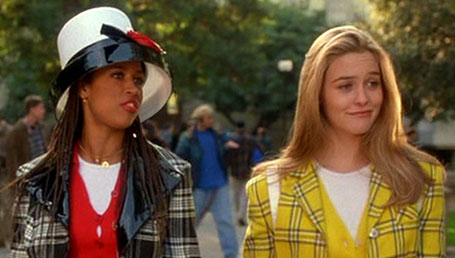
Oh, how I wanted that yellow plaid skirt!
And so it came to be that my first Jane Austen novel was Emma. Truly, I did not fall in love with the book upon this reading. I’m not even certain that I finished it. This is not a story of an adolescent love affair with the love affairs of Jane Austen’s imagination. But I’ve always held on to the book, and I did re-read it sometime in college - at which time, I guess liked it.And so begins my first three-month project: Summer of Austen. I have read Emma, of course, and Pride and Prejudice (though I’ve seen the BBC miniseries countless more times than I’ve read the novel). I have not read any other Austen novels though and really know little about her life and contemporaries, beyond common popular knowledge.

First up: Northanger Abbey.
Subscribe to:
Posts (Atom)